How to Get Your Dental Practice Cited by ChatGPT and Perplexity
What does it mean to be cited?
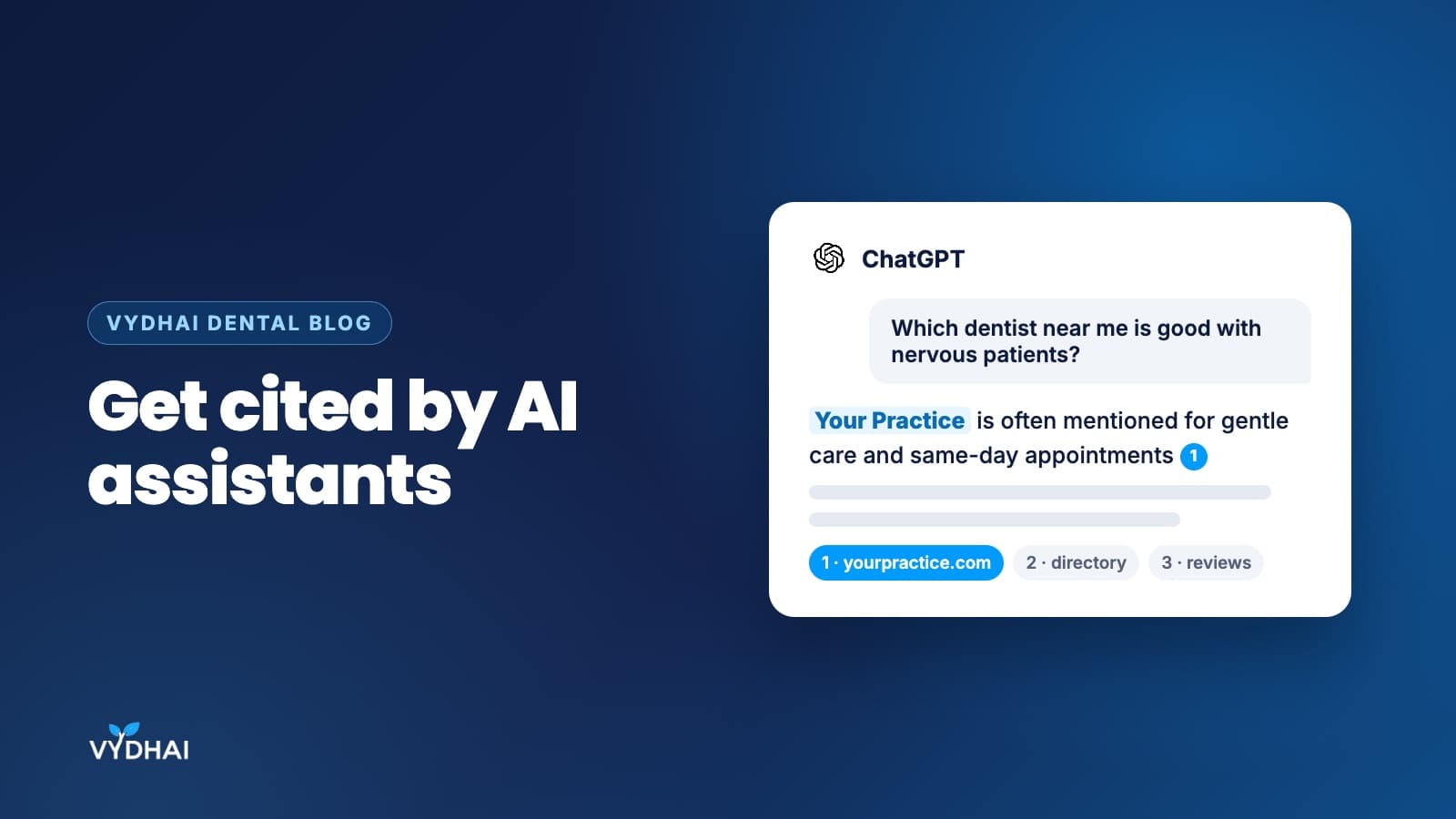
When ChatGPT or Perplexity answers a question using the web, it usually shows its sources — small links or numbered references next to the answer. Being cited means your page is one of those sources. Being named means your practice appears in the answer itself. The two often go together, and both depend on the same groundwork.
Neither can be bought or guaranteed. Both assistants decide which sources to use each time they answer, and the result varies with the wording of the question, the patient's location and the model version. What a practice can do is make itself an easy, trustworthy source to use. That comes down to five things.
Step 1: Let the assistants read your site
An assistant cannot cite a page it is not allowed to read. OpenAI uses OAI-SearchBot for ChatGPT's search results and GPTBot for model training. Perplexity uses PerplexityBot. These are controlled through your website's robots.txt file, separately from Google's crawler.
Check your robots.txt and make sure these crawlers are not blocked, either by name or by a broad rule. Also check that your security service or firewall is not quietly rejecting them; some block unfamiliar bots by default. If your pages only load their text through heavy scripting, confirm the important content is present in the page itself, since not every crawler runs scripts the way a browser does.
If you are unsure how to read robots.txt, a simple test is to ask whoever manages your website to confirm in writing which AI crawlers are allowed, and whether any firewall or bot-protection service sits in front of the site. It is a five-minute question for anyone who manages websites, and the answer removes the most basic reason a practice cannot be cited.
Step 2: Make sure you are in the indexes they draw on
Assistants combine their own crawling with established search indexes. ChatGPT's search has historically drawn on Bing's index among other sources, so a practice that is invisible on Bing is at a disadvantage there. Many practices have never verified their site with Bing Webmaster Tools or claimed their Bing Places listing.
Verify the site with both Google Search Console and Bing Webmaster Tools, submit your sitemap to each, and consider IndexNow, a free protocol that notifies Bing and others when pages change. These are one-time setup tasks that remove an avoidable barrier.
Step 3: Write passages worth quoting
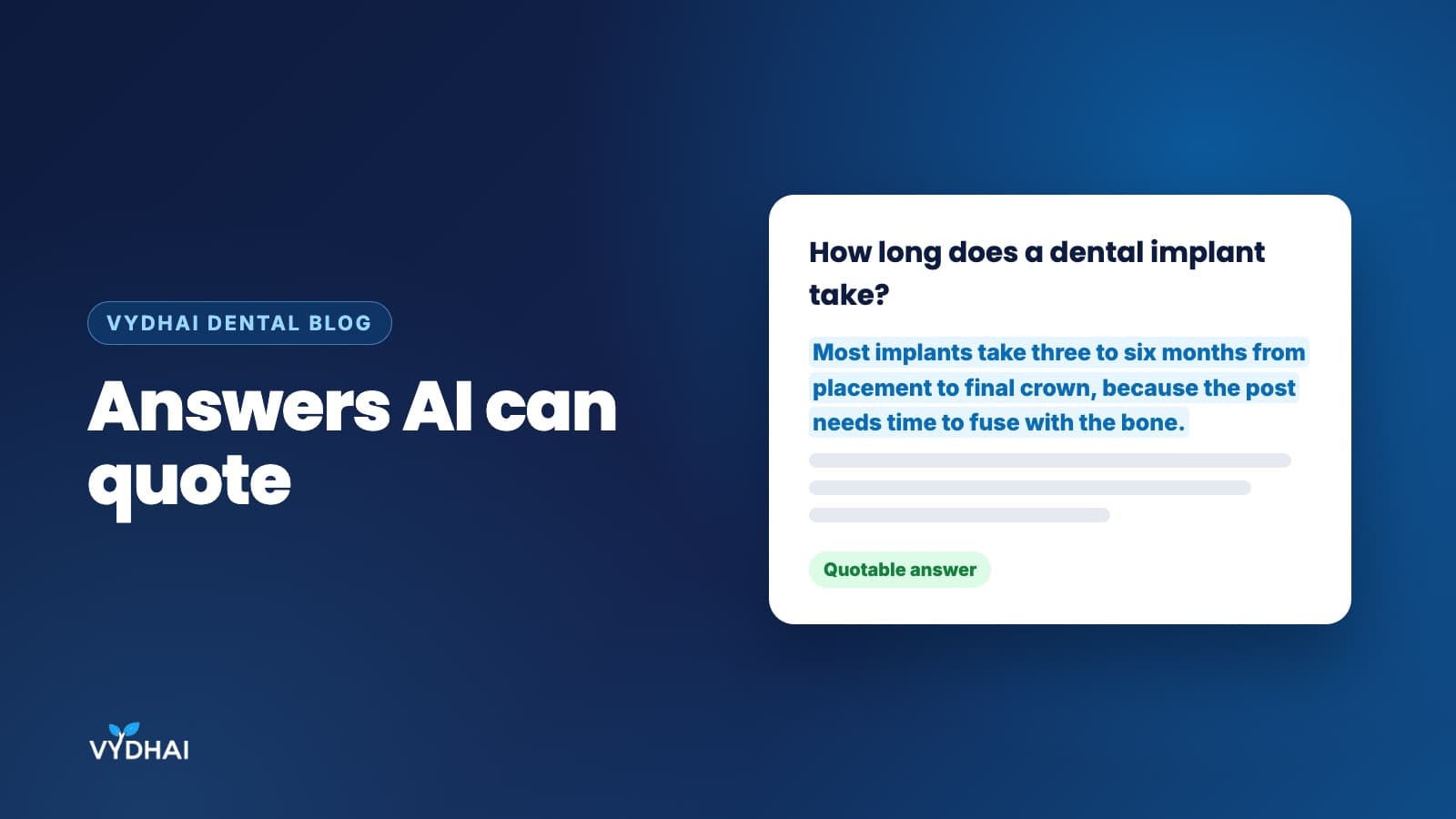
Assistants cite pages that contain a clear answer to the question asked. That means headings phrased as real patient questions and a direct answer in the first sentence or two beneath each one, followed by the detail.
Aim for passages of roughly 40 to 80 words that make sense on their own: they name the treatment, the practice and the point, without relying on the paragraph before. Include the specifics patients ask about — insurance plans accepted, whether you see children or anxious patients, same-day emergency availability, languages spoken, evening or weekend hours. Generic copy gives an assistant nothing to distinguish you from the practice down the road.
Step 4: Describe your practice in structured data
Structured data is a machine-readable summary embedded in your pages. For a dental practice that usually means a Dentist or LocalBusiness description with your name, address, phone number, hours and website; Service entries for your main treatments; and FAQPage markup on pages with real questions and answers.
The markup must match what visitors can see. Describing services, hours or answers that are not on the page is a violation of search engine guidelines and undermines trust. Done honestly, structured data reduces the chance of an assistant confusing you with another practice of a similar name.
Step 5: Earn corroboration from other sources
Assistants are more willing to name a practice when independent sources agree about it. That includes consistent listings on Google Business Profile, Bing Places, Apple Maps, Yelp, Healthgrades and dental-specific directories; a steady flow of genuine patient reviews; and mentions in local news, community organizations, schools or professional associations.
Consistency matters as much as volume. If three directories list different hours or an old address, the assistant has to decide which to believe, and the simplest option is to name someone else. Clean up outdated listings before chasing new ones.
Common mistakes that keep practices out of AI answers
A handful of problems account for most of the practices we see missing from AI answers. A security service or hosting setting blocking AI crawlers without anyone knowing. A website that was never verified with Bing. Service pages that describe the practice's philosophy at length but never directly answer what the treatment is, who it suits and how long it takes.
Others are outdated listings with old hours or a previous address, a Google Business Profile with only a primary category and no services, and a review profile that has not grown in a year. Each is fixable, and fixing the first two is often the quickest improvement available.
Can you pay to be cited?
Not in the organic answer. Some AI platforms are introducing clearly labelled advertising alongside their answers, and that can be a useful channel in its own right, but it is separate from the sources an assistant chooses to cite or the practices it names in its own response.
Organic citations come from being a clear, trustworthy, accessible source. That is slower to build than buying an ad, but it compounds: the same work that earns a citation in ChatGPT also tends to help in Perplexity, Gemini and Google's AI Overviews.
How long does it take?
Technical fixes such as unblocking crawlers can take effect within days of the next crawl. Content rewrites and structured data usually take several weeks to be picked up and reflected in answers. Corroboration — reviews and external mentions — builds over months.
Because answers vary, judge progress over a fixed set of questions asked repeatedly rather than a single search. Track whether your practice is named, cited as a source, mentioned in passing or absent, and whether what the assistant says about you is accurate.
A checklist to work through
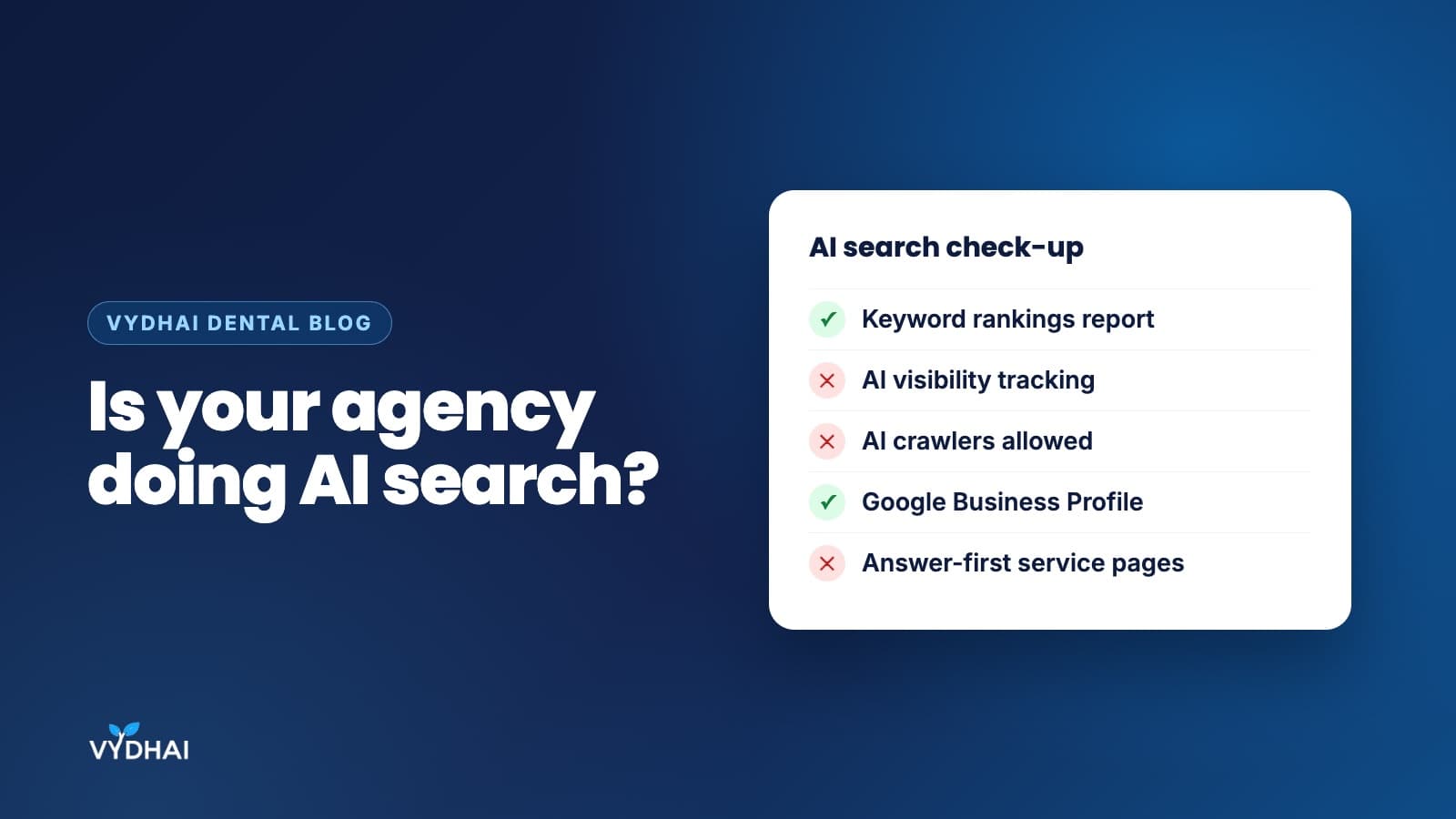
If you want to tackle this yourself, work through the five steps as a simple checklist. Crawler access: robots.txt and firewall allow OAI-SearchBot, GPTBot and PerplexityBot. Indexing: site verified in Google Search Console and Bing Webmaster Tools, sitemap submitted to both. Content: each main service page leads with direct answers to real patient questions.
Structured data: practice, services and FAQs described in markup that matches the page. Corroboration: Google Business Profile, Bing Places, Apple Maps and the main dental directories complete and consistent, with a routine review request process in place.
Tick each one off only when you have checked it, not when someone says it has been done.
A realistic starting point
Start by finding out where you stand. Ask ChatGPT and Perplexity the questions your patients ask — with your city, your specialties and the constraints patients mention — and note what comes back. Then work through the five steps in order, since each one makes the next more effective.
If you would rather have this done systematically, our free AI Visibility Audit runs a standard set of patient-style prompts across the major assistants, checks crawler access and structured data, and shows which of the five steps is holding your practice back.
Frequently asked questions
How do I get my dental practice cited by ChatGPT?+
Allow OpenAI's crawlers in your robots.txt, make sure your site is indexed by Bing as well as Google, write service pages with short, self-contained answers to real patient questions, add structured data that matches the visible content, and keep your listings and reviews consistent across the major directories.
Why does Perplexity cite other dentists but not my practice?+
Common causes are PerplexityBot being blocked by robots.txt or a firewall, service pages that lack direct answers to the question asked, inconsistent details across directories, and few independent mentions or reviews. Checking crawler access first is the quickest win, because a blocked site cannot be cited at all.
How long does it take for ChatGPT to start recommending my practice?+
Crawler access fixes can take effect within days, content and structured data changes typically take several weeks, and corroboration from reviews and mentions builds over months. Results vary between questions and runs, so measure progress across a fixed set of prompts over time rather than a single search.
Ready to Become the Practice AI Recommends?
Book a free, no-obligation strategy call. We'll show you exactly how ChatGPT, Perplexity, and Google AI talk about your practice — and the plan to win the answer.
- What ChatGPT, Perplexity & Google AI say about you
- Where competitors are winning the AI answer
- Your local search & Google Business Profile
- Website speed and AI-readability
- Current ads and call/form tracking
What you'll walk away with
- Your AI visibility snapshot
- A clear AI-First roadmap
- A plan for more booked new patients
No obligation · US-based team · Dental-only