GEO and AEO for Dental Practices: What They Are and How They Work
SEO gets you ranked. GEO gets you named.
Search engine optimization has always been a game of position — get your practice into the top few blue links, or the top three pins on the map pack, and you capture the click. That game still matters. But it assumes the patient is looking at a list of options and choosing one themselves.
Generative Engine Optimization (GEO) is the discipline of making sure your practice is the option an AI system names when it answers a question on a patient's behalf. When someone asks ChatGPT, Perplexity, Gemini, or Google's AI Overviews "who's a good dentist for implants near me," the model doesn't return ten links — it returns one answer, sometimes two or three. GEO is how you become that answer instead of the practice down the street.
Where does AEO fit in?
You will also see this work called Answer Engine Optimization (AEO). The two terms overlap heavily, and most of what a practice does under one heading it also does under the other. AEO is the content side: writing and structuring pages so an answer engine can lift a direct, self-contained answer to a specific question. GEO is the wider practice around it — the structured data, corroboration, freshness, and crawler access that make a model confident enough to use that answer.
In this article we use GEO for the whole discipline and treat AEO as the part of it that lives on your pages. We cover the AEO half in more detail in a separate article, "What Is AEO for Dentists?"
Why a single answer changes the math
A page of search results is forgiving. Rank sixth and a patient willing to scroll still finds you. Rank third in the map pack and you are visibly in the running alongside everyone else. The patient sees the whole field and makes their own call, which means partial visibility still produces patients.
An AI answer removes that cushion. The assistant has already done the comparing before the patient sees anything, and it returns a short list — frequently one practice, sometimes three. There is no second page to be on. You are either in the answer or you are not in the conversation at all, and the patient never learns you existed.
That is a harsher distribution than search has ever had, and it is why the gap between practices that have done this work and practices that have not tends to widen rather than close. The signals that make a model confident enough to name you are cumulative — structured data, consistent descriptions, dated content, corroboration from sources beyond your own site. A practice that starts building them early is not just ahead on a leaderboard; it is the reference the model has learned to reach for.
What AI models actually look for
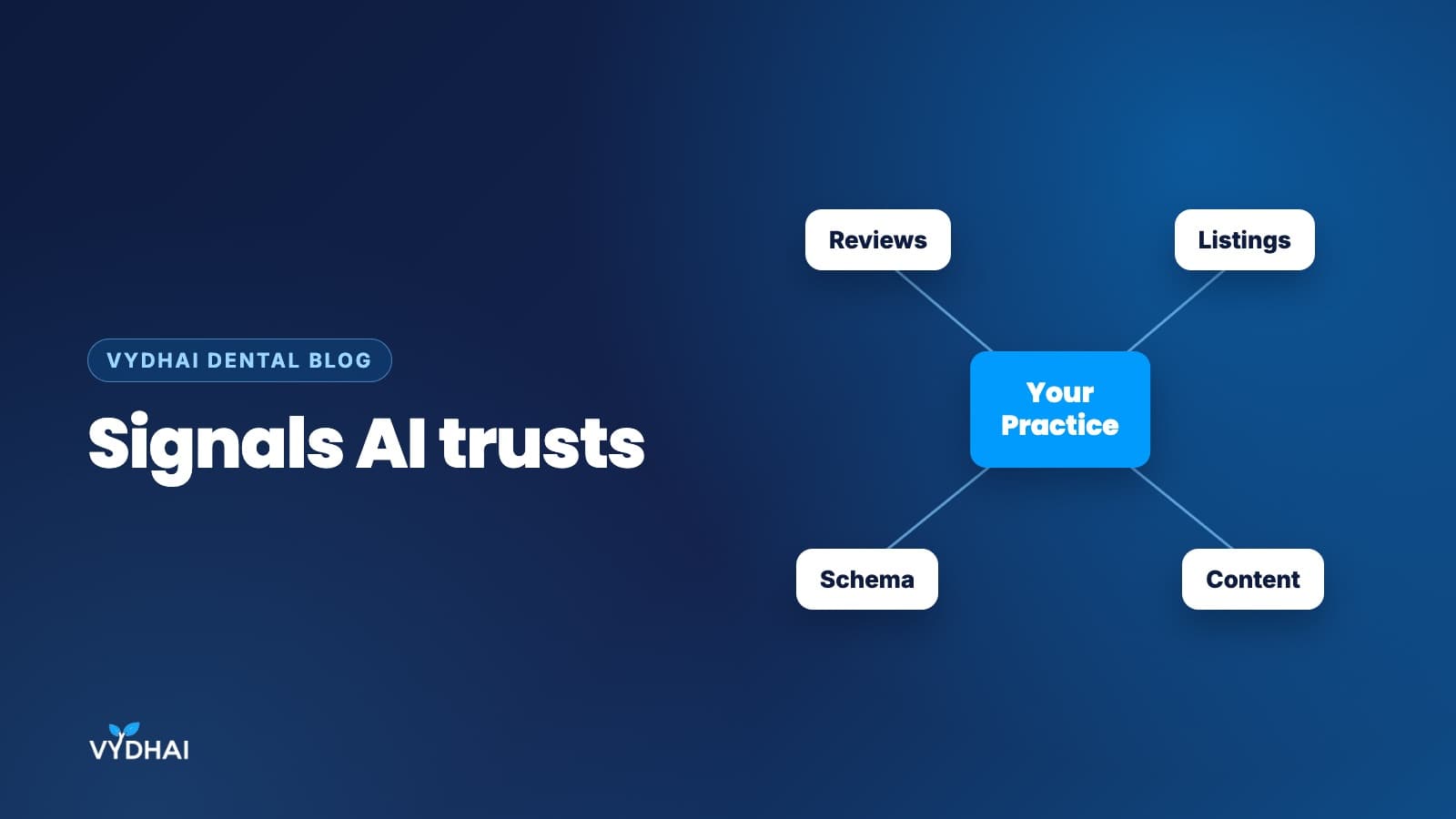
Large language models don't rank pages the way a traditional search index does. They synthesize an answer from whatever they can verify and cite with confidence, which means they lean on a few specific signals: structured data that spells out who you are and what you do (schema.org markup — Organization, Service, FAQPage, Article), content written in a directly quotable, question-and-answer format rather than dense marketing prose, and corroboration — do other sources on the web (directories, reviews, press, your own dated content) agree with what your site claims about itself.
A site can rank #1 on Google and still be functionally invisible to an AI answer if none of that exists. That's the gap GEO closes.
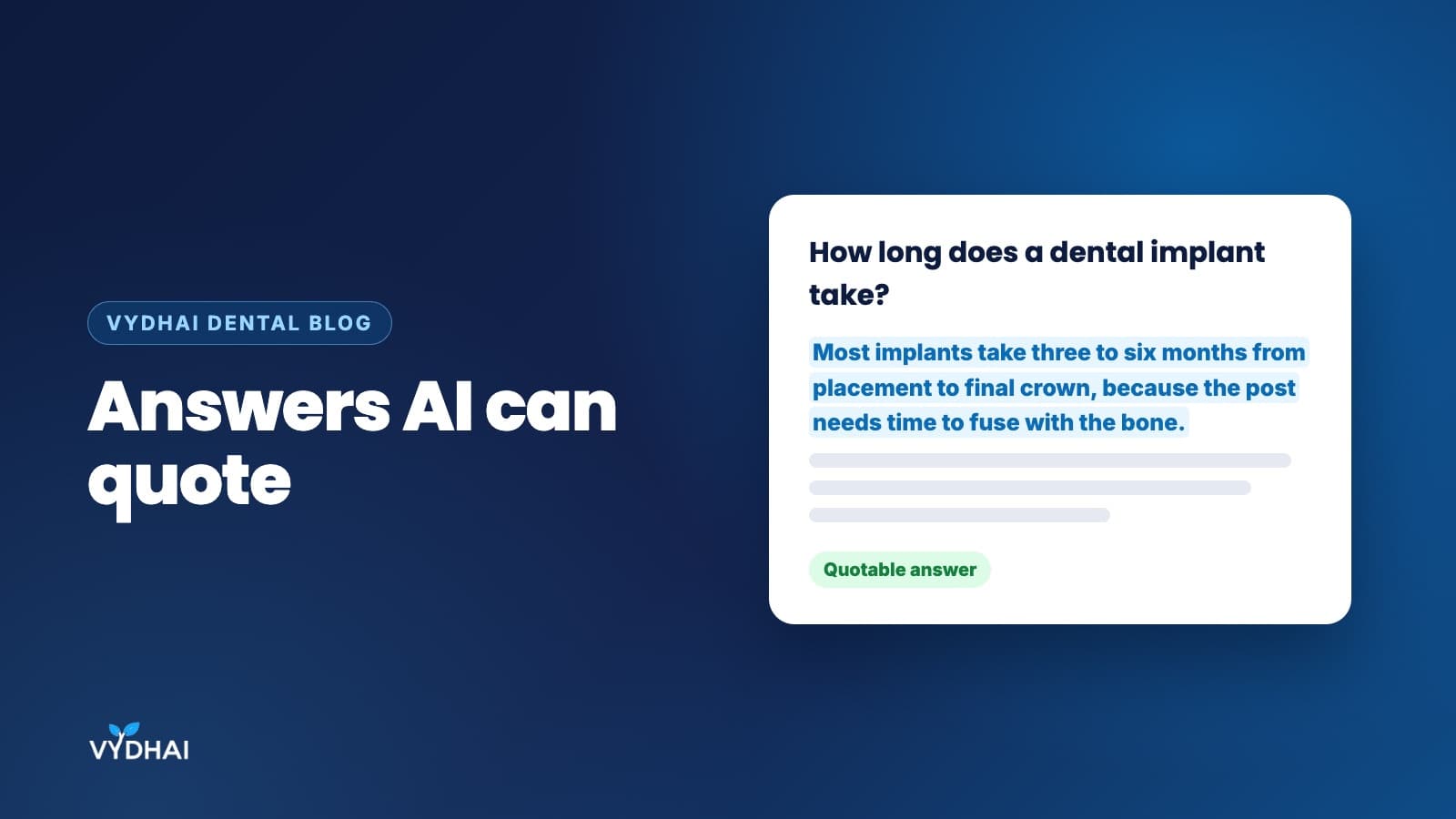
It helps to think about the difference between being readable and being quotable. A well-written page about your implant services is readable — a human understands it fine. It becomes quotable when a specific question a patient might ask is answered, in full, inside a self-contained passage the model can lift without needing the surrounding page for context. Most practice websites are full of the first kind of writing and contain almost none of the second.
The four surfaces don't weight the same things
"AI search" is a convenient shorthand for four systems that behave differently, and a practice can be strong on one while absent from another. Google AI Overviews draws heavily on Google's own index, so structured data, local signals, and content freshness carry most of the weight. Gemini leans on the same entity understanding that powers Google's knowledge graph.
ChatGPT's web search behaves differently. It puts substantial weight on corroboration — whether independent sources agree that your practice exists, does what it claims, and is regarded well. A practice with an immaculate website and no presence anywhere else on the web can be comprehensively ignored by it. Perplexity sits somewhere in between: it cites passages directly and shows its sources, which rewards clean, quotable page structure, but it also cross-references what it finds.
The practical consequence is that the foundation is shared but the emphasis is not. Structured data and citable content help everywhere. Third-party corroboration is close to optional for Google AI Overviews and close to mandatory for ChatGPT. Any honest GEO plan states which surface it is prioritising and why, rather than implying all four move together.
What this looks like in practice
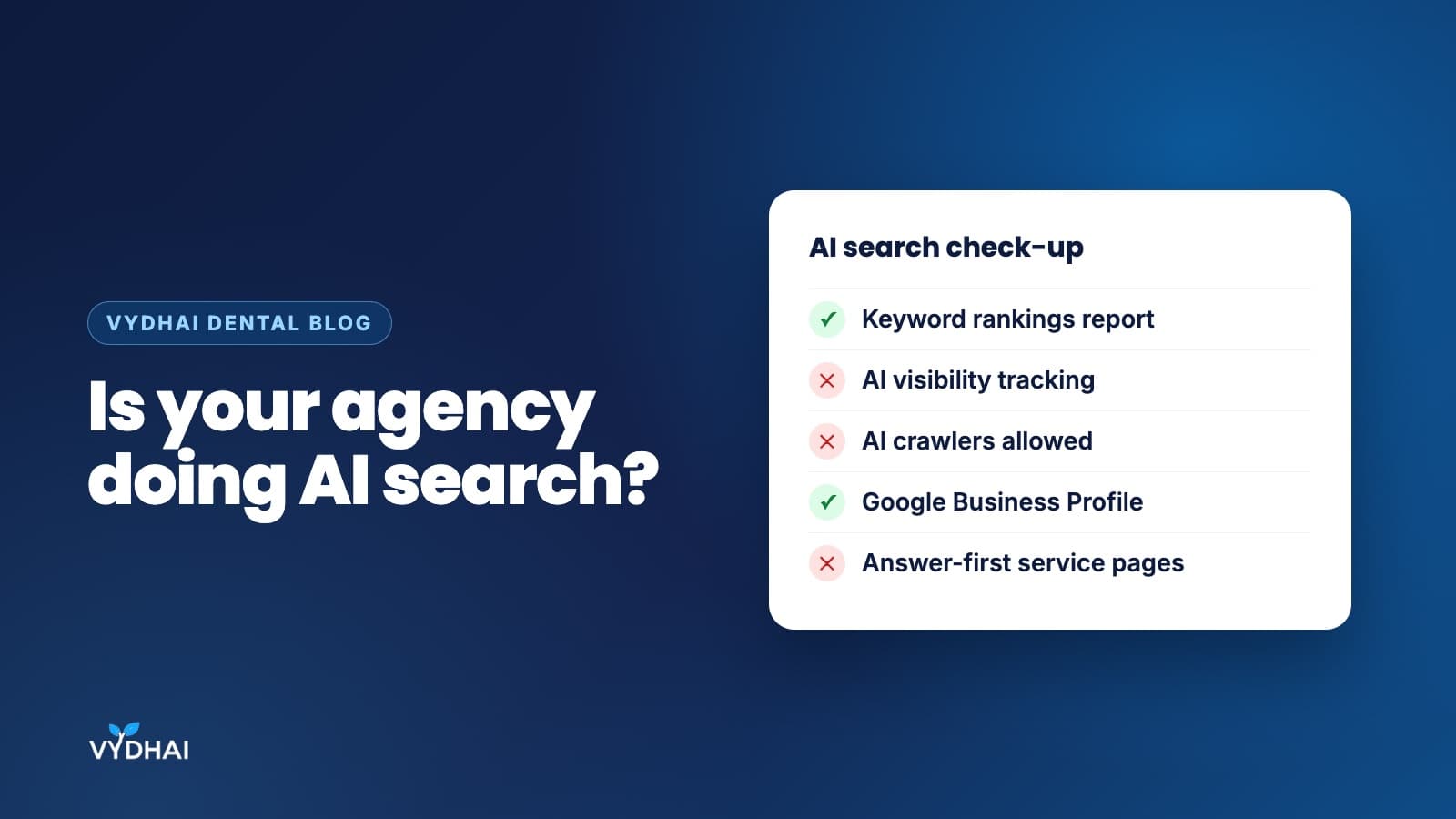
Concretely, GEO work usually means: auditing what AI engines currently say about a practice (often nothing, or worse, outdated or wrong information); adding machine-readable schema so a model can parse your services, location, and credentials with confidence; rewriting key pages so that questions patients actually ask are answered in self-contained, 40–80 word passages an AI can lift directly; making sure AI crawlers (GPTBot, ClaudeBot, PerplexityBot, and others) are explicitly allowed to read your site; and publishing dated, authored content so the freshness and expertise signals AI models weight are actually present.
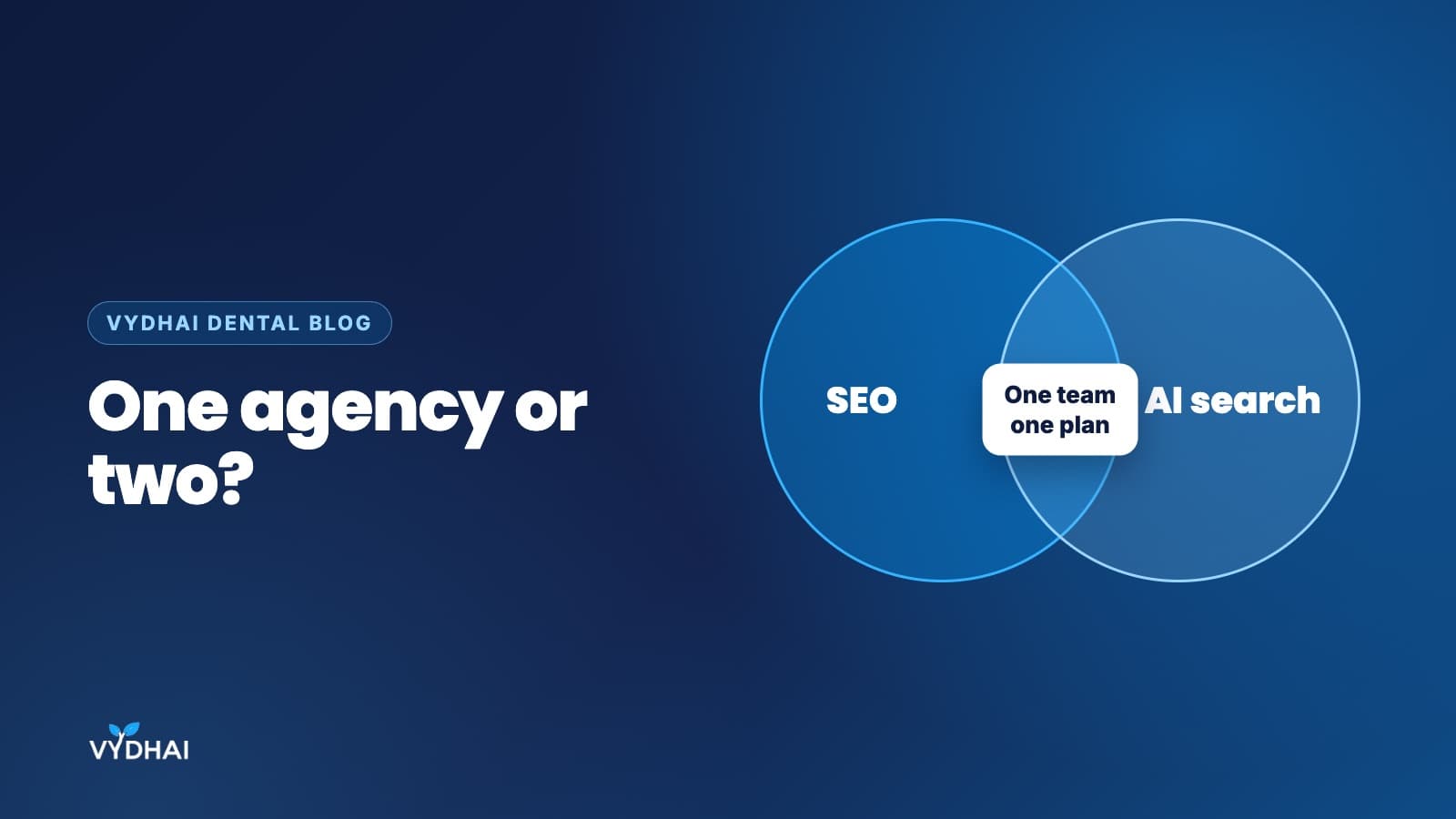
None of it replaces SEO — the two reinforce each other. But treating GEO as an afterthought is how a practice ends up doing everything right for Google and still never getting named by the assistant a growing share of patients ask first.
What GEO cannot do
It is worth being direct about the limits, because this is a field with no shortage of overclaiming. GEO cannot make a model say something that is not true about your practice. If you do not offer same-day crowns, no amount of structured data will get you named for them, and attempting it produces the worst outcome available — a patient arriving with an expectation you cannot meet.
It cannot manufacture reputation. Reviews, credentials, and clinical outcomes are inputs to the answer, not things an optimisation program invents. And it cannot guarantee a position, because nobody controls what a model outputs. Answers vary with how the question is phrased, where the patient is, which model version is running, and sometimes simply between two identical runs a minute apart.
What GEO does is raise the probability that when a patient asks, your practice is the one with the clearest, most verifiable, best-corroborated answer available for the model to reach for. That is a real and measurable shift. It is not a purchased slot, and any agency describing it as one is describing something that does not exist.
How you know whether it's working
Because model output varies, a single spot check proves very little. Asking ChatGPT once, getting a good answer, and concluding the work succeeded is the same mistake as checking one keyword ranking on one device and declaring an SEO campaign won.
The measurement that holds up is a fixed prompt set. Write down the questions a real patient would ask — phrased naturally, including the constraints patients actually mention, like insurance, anxiety, availability, or a specific procedure. Run that exact set across each AI surface before any work starts, and record for every prompt whether the practice was named, mentioned in passing, or absent. That becomes the baseline.
Then re-run the identical prompts on a schedule. Because the wording never changes, the movement you see is movement in the answer rather than in the question. Track three things: whether you are named, whether the description of you is accurate, and whether your site is cited as a source. The second matters more than practices expect — being named with the wrong services or an old phone number is its own problem to fix.
Where a practice should start
The order matters, because each step depends on the one before it. Start with the audit, since you cannot prioritise what you have not measured, and the results are frequently surprising — many practices discover the models say nothing about them at all, or repeat details that were accurate three years ago.
Then make the site machine-readable: schema that describes the practice, the services, and the location without ambiguity. Then confirm the AI crawlers can actually reach it, which is a five-minute check that is wrong on a surprising number of dental sites. Then rewrite the pages that matter into genuinely quotable passages. Corroboration — directory profiles, reviews, mentions beyond your own domain — comes last in sequence but is not optional, particularly if ChatGPT matters to you.
A practice that works through that list in order ends up with something more durable than a ranking. It ends up as the source the models have learned to trust on the questions its patients are asking.
Ready to Become the Practice AI Recommends?
Book a free, no-obligation strategy call. We'll show you exactly how ChatGPT, Perplexity, and Google AI talk about your practice — and the plan to win the answer.
- What ChatGPT, Perplexity & Google AI say about you
- Where competitors are winning the AI answer
- Your local search & Google Business Profile
- Website speed and AI-readability
- Current ads and call/form tracking
What you'll walk away with
- Your AI visibility snapshot
- A clear AI-First roadmap
- A plan for more booked new patients
No obligation · US-based team · Dental-only