How Patients Are Starting to Use ChatGPT and AI Search to Choose a Dentist
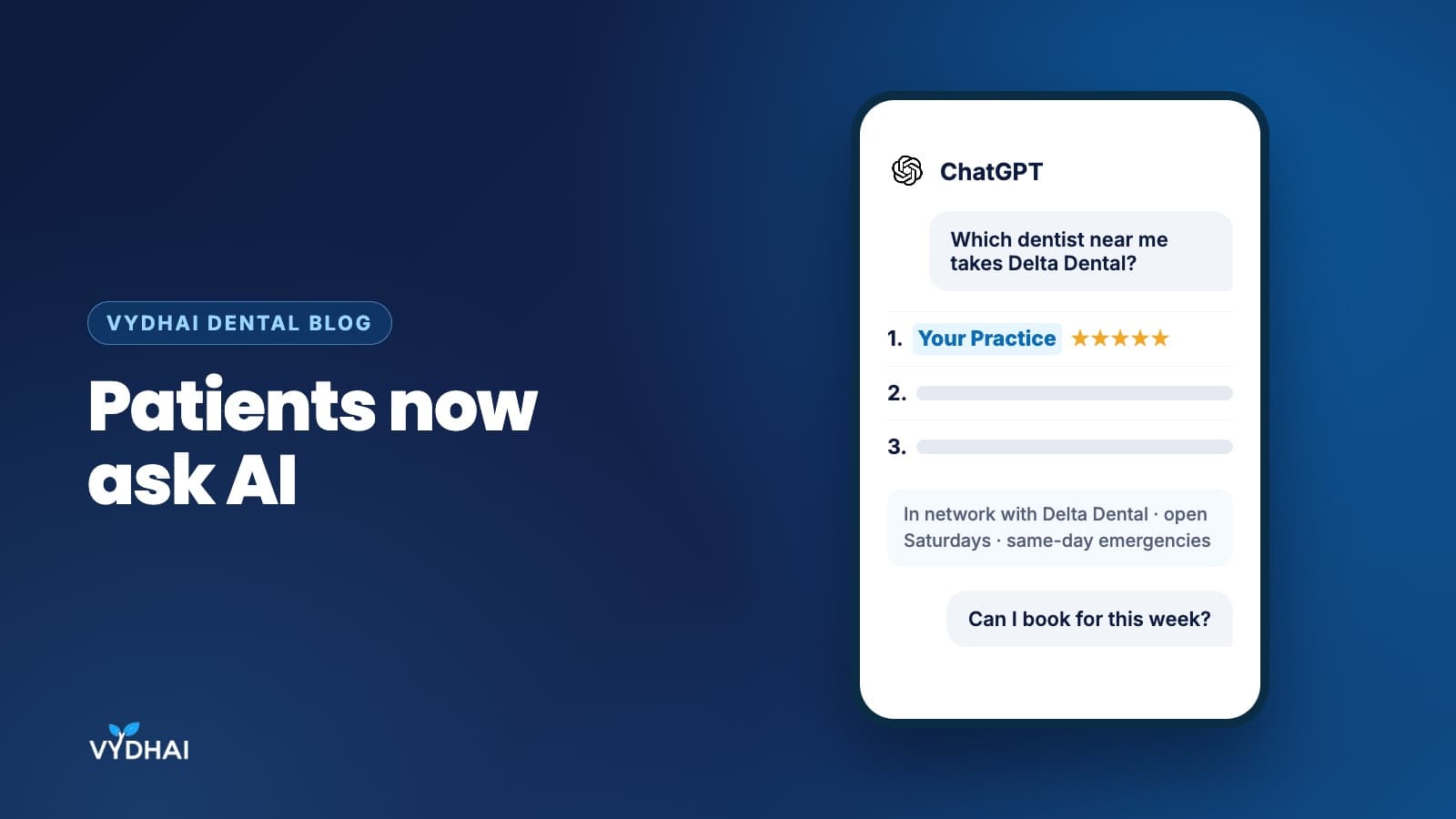
The first move used to be a search box. It's increasingly a question.
For two decades, "finding a dentist" started the same way: type a query into Google, scan the map pack, click a few sites, compare. That flow assumed the patient was the one doing the filtering.
AI assistants change the order of operations. Instead of typing "dentist near me" and doing the comparing themselves, a growing number of patients are asking ChatGPT, Perplexity, or Google's AI Overviews directly — "who's a well-reviewed dentist near me that does same-day crowns," or "which local dentist is good with anxious patients." The assistant does the filtering and hands back a short, confident answer.
What an AI question actually looks like
The shape of the question changes along with the tool. Search queries were trained by twenty years of search engines into something terse and keyword-shaped: "dentist 78704," "emergency dentist open now," "invisalign cost." Patients learned to strip out everything a search index could not use.
People do not talk to an assistant that way. They describe their situation, because the assistant can handle it — "I haven't been to a dentist in about six years and I'm honestly dreading it, is there somewhere near Round Rock that's good with nervous patients and takes Delta Dental?" That single question carries four constraints: location, a specific anxiety, an insurance network, and an implied need for a gentle first visit.
This matters more than it first appears. The assistant will try to match all four constraints against what it knows. If your site never states in plain, parseable language that you work with anxious patients, or which insurance networks you accept, you are not a candidate for that answer — not because you were outranked, but because nothing the model could read made you eligible to be considered.
Why this changes the competitive picture
A page of ten search results is forgiving — you can rank #6 and still get found by a patient willing to scroll. An AI answer is not forgiving in the same way. It typically names one to three practices, and if yours isn't among them, you're not "lower on the page" — you're absent from the conversation entirely.
That's a meaningfully different bar to clear than traditional local SEO, and it's why practices that look strong on Google can still be completely unrepresented the moment a patient asks an AI assistant the same question instead of typing it into a search box.
Where the assistant gets its answer
It is tempting to treat AI recommendations as a black box, but the inputs are more ordinary than the output suggests. The assistant is drawing on what it can read and verify: your website and how clearly it is structured, your listings and profiles elsewhere, reviews, and whatever independent sources mention you. Then it weighs whether those sources agree with each other.
That last part is where most practices quietly lose. A site can assert excellent things about itself, but a model treats self-description with roughly the scepticism a careful person would. When a practice's own claims are echoed by independent sources — directories, reviews, professional listings, local coverage — confidence rises and the practice becomes safe to recommend. When nothing outside the practice's own domain confirms it exists, a cautious model will often reach for a competitor it can corroborate instead.
There is a useful diagnostic hiding in this. Open an assistant and ask it, plainly, what it knows about your practice by name. If the reply is vague, hedged, or quietly about somebody else, that is not a glitch to be annoyed by — it is an accurate readout of how much verifiable material about you exists on the open web. Most practice owners find the exercise uncomfortable, which is rather the point of running it.
The practical reading: your website determines whether you are eligible for an answer, and everything outside your website determines whether the model is confident enough to actually name you.
Referrals are getting a second opinion too
The assumption behind most practice marketing is that word of mouth bypasses search entirely — a friend recommends you, the patient calls. That chain now has an extra link in it more often than practices realise.
A patient who receives a recommendation increasingly checks it, and the check is no longer a quick look at your Google reviews. It is a question to an assistant: "is this practice any good?" or "what should I know about this dentist before booking?" What comes back shapes whether the referral converts.
This creates a failure mode worth naming. If the assistant has nothing substantive to say about you, the answer is a shrug — no detail, no confirmation, occasionally a suggestion of better-documented alternatives nearby. A referral you genuinely earned can cool off at exactly that moment, and nothing in your practice's own reporting will ever show you why the patient did not call.
What practices can do about it now
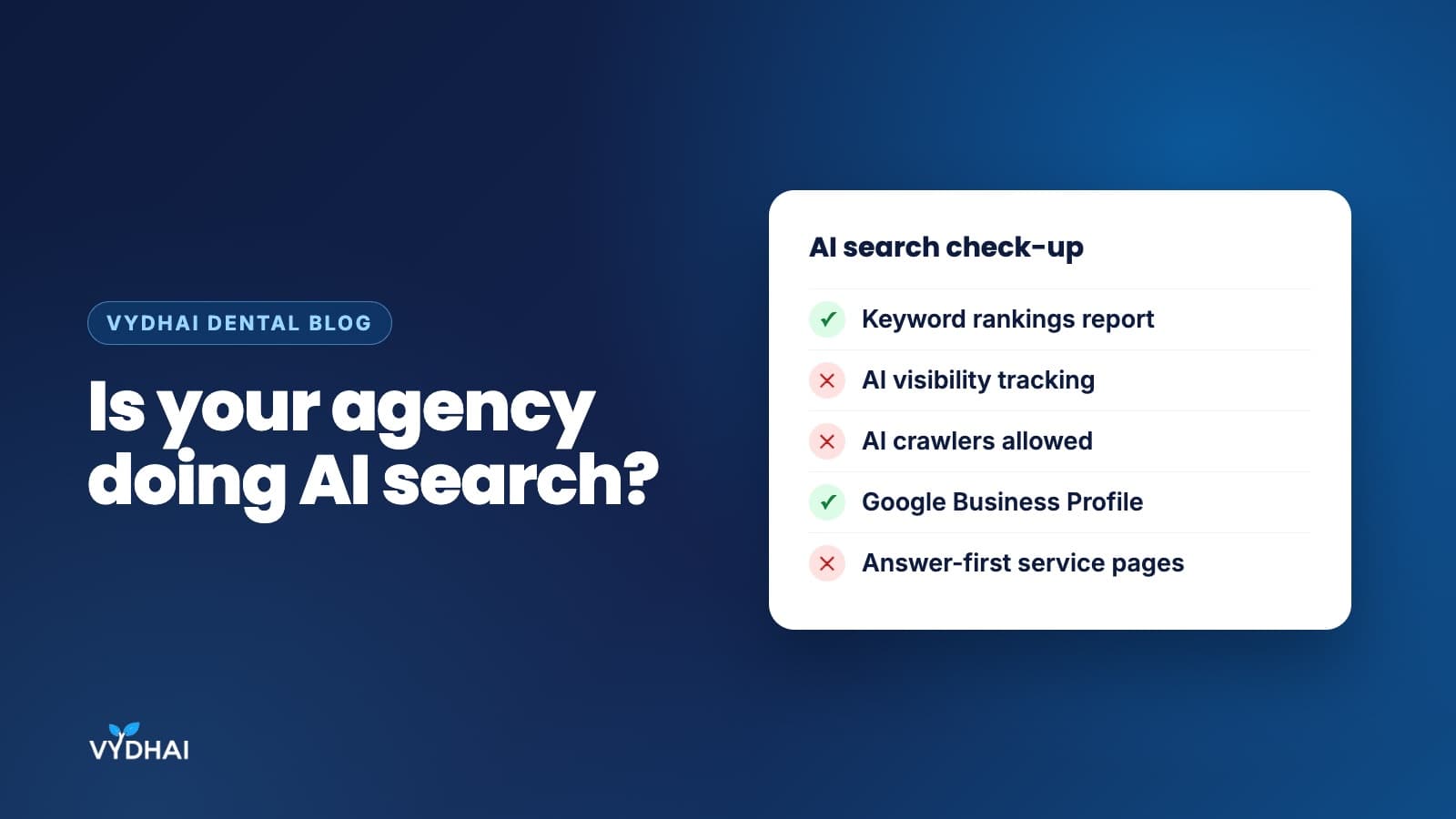
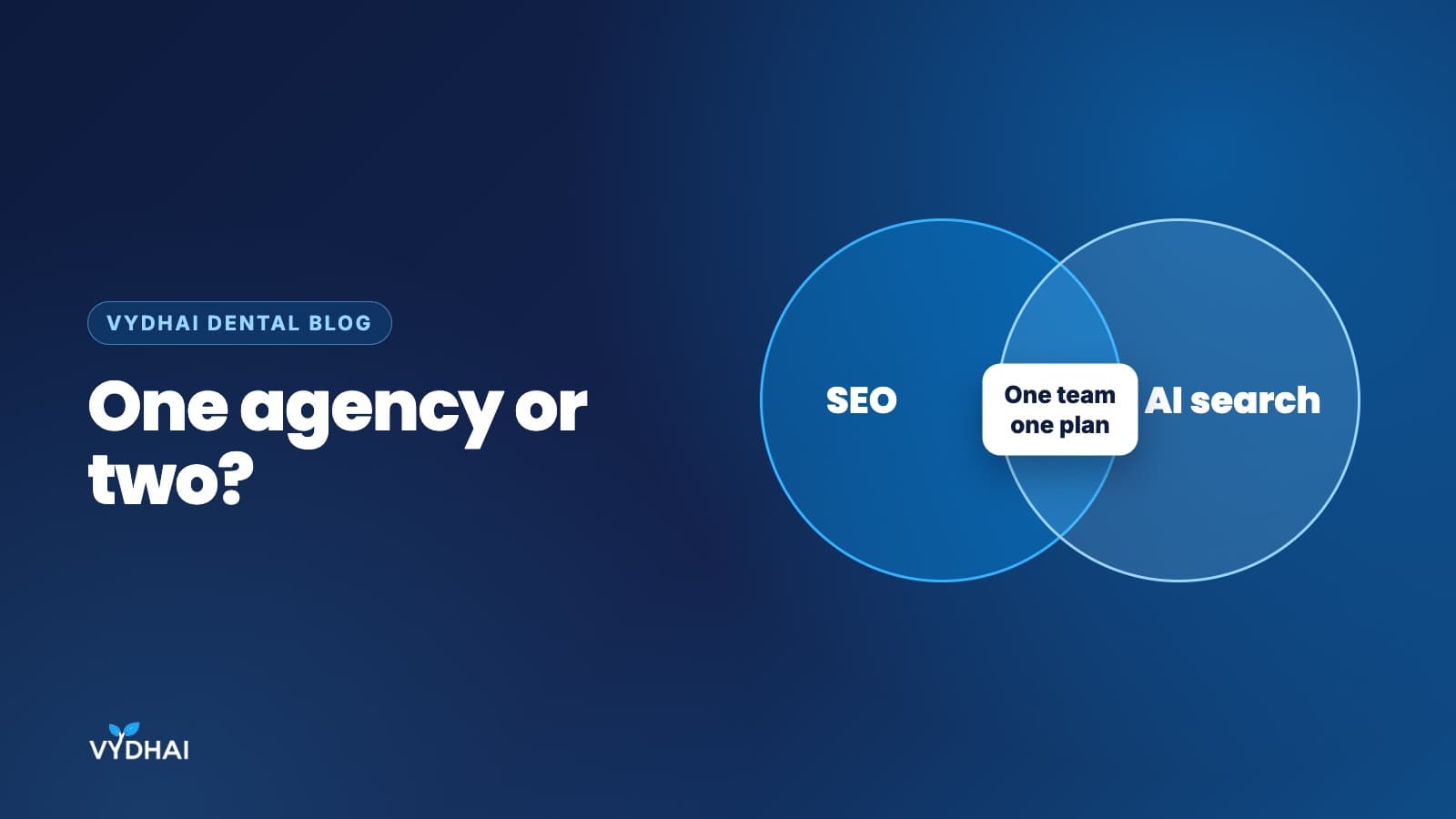
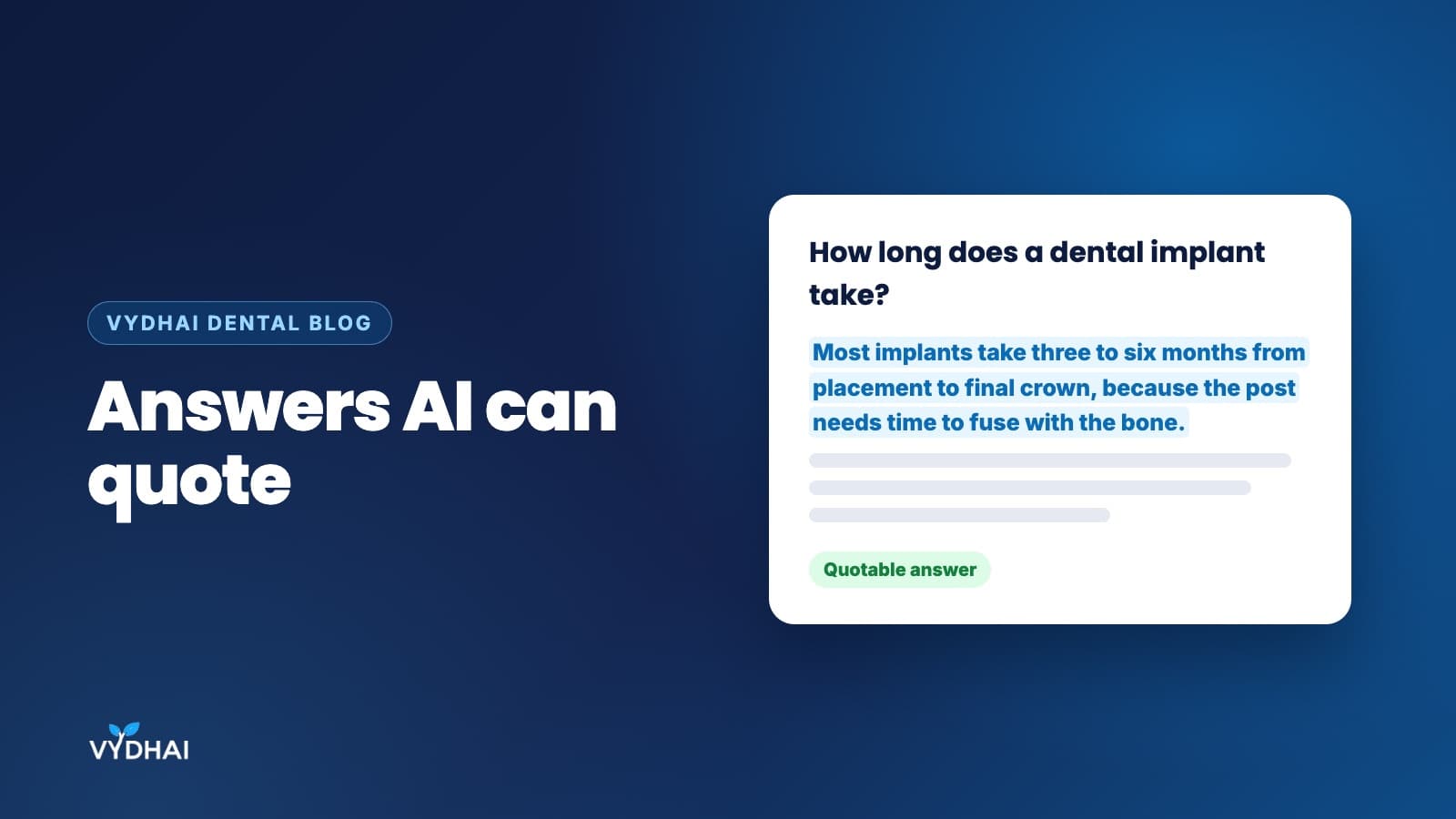
The practical response isn't to abandon SEO — Google is still where AI models learn a large share of what they know about a business, and it remains where most patient journeys begin today. The response is to treat AI visibility as its own layer: make sure your site is structured so an AI system can verify who you are and what you offer, publish the kind of clear, question-answering content models can quote directly, and keep that content current, dated, and attributed.
The practices moving on this now are, in effect, teaching the models to recommend them before most of their competitors have noticed the question has changed.
What this does not mean
A shift in how patients start their search is not the same as a replacement, and it is worth resisting the version of this argument that says everything else is finished. Google remains the largest single source of new patients for most practices, the map pack still drives calls, and a strong local SEO position still matters enormously. Nothing here is an argument for reducing that investment.
Word of mouth remains the strongest signal in dentistry, and no optimisation program competes with a patient who tells three friends about a good experience. Clinical quality, chairside manner, and how the front desk answers the phone still decide whether a practice grows.
The honest framing is additive. AI search is a new front door that a growing share of patients walk through first, and most practices have not yet furnished it. Treating it as a supplement to the fundamentals is right. Treating it as a replacement for them is not, and treating it as something that can be safely ignored for another two years is the actual risk.
The short version
Patients are increasingly asking an assistant instead of a search box, and asking in full sentences that carry real constraints — insurance, anxiety, availability, specific procedures. The assistant matches those constraints against what it can read and verify about local practices, then names one to three.
Being eligible for that answer means your site states plainly and in machine-readable form what you do, who you serve, and where. Being confidently named means independent sources agree. Most practices have done neither, which is precisely why the opportunity is still open — and why it will not stay open indefinitely.
Ready to Become the Practice AI Recommends?
Book a free, no-obligation strategy call. We'll show you exactly how ChatGPT, Perplexity, and Google AI talk about your practice — and the plan to win the answer.
- What ChatGPT, Perplexity & Google AI say about you
- Where competitors are winning the AI answer
- Your local search & Google Business Profile
- Website speed and AI-readability
- Current ads and call/form tracking
What you'll walk away with
- Your AI visibility snapshot
- A clear AI-First roadmap
- A plan for more booked new patients
No obligation · US-based team · Dental-only